
Millions of Working Families Could Lose Groceries Tomorrow
For the past seven weeks, we've peeled back the layers of what it really means to be working and homeless.
We've met people like the contractor in Union Square who couldn't afford the boots to start a job, Carlos who spent a third of his paycheck just getting to work, and Tasha who faced the impossible choice between caring for her sick child or keeping her job. We've talked about how transportation, childcare, healthcare, technology, and social networks all intertwine to form a fragile system that punishes progress.
Each story has revealed the simple truth that people experiencing homelessness aren't refusing to work, they're working harder than most of us realize and still falling behind.
Now, as the government shutdown continues, that fragile system is about to crack even further.
If SNAP benefits are halted on November 1, millions of working families will lose access to groceries overnight.
Here are the facts:
More than 42 million Americans rely on SNAP to eat.
Roughly 28% of all SNAP households already include someone who works.
Among families with children, over half have earned income.
In other words, the majority of SNAP recipients aren't "the unemployed." They're the people keeping our economy running — childcare workers, cashiers, delivery drivers, home-health aides, and restaurant staff — doing everything they can to stay afloat while the cost of living keeps rising.
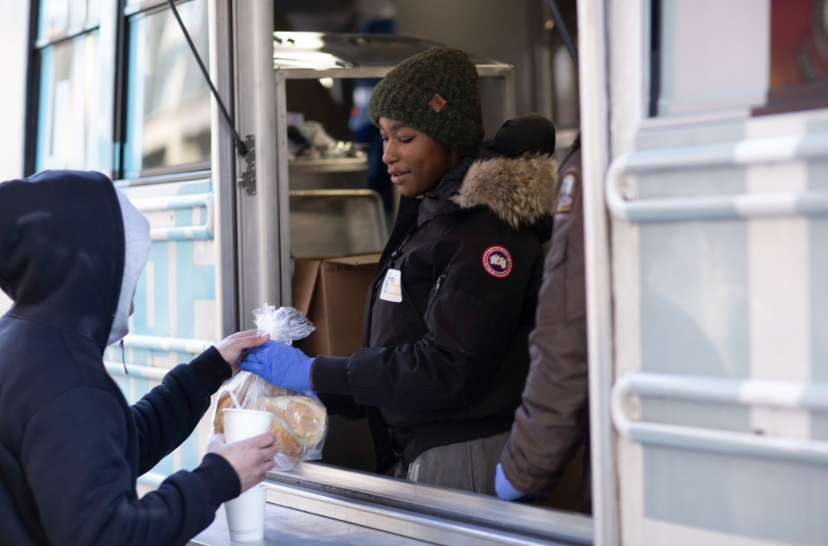
At City Relief, we're preparing to meet the moment. We'll be increasing the amount of soup and bread we distribute, while also providing additional nutrition for the transient and sheltered populations we reach — including protein bars, fruit, and individually wrapped snacks that can be carried in their bags and eaten long after we're gone. It's one small way to stretch the impact of every meal and meet both the immediate and lasting needs of our neighbors.
But we can't do it alone.
If you've been moved by this series, don't let it end here:
Volunteer: Stand beside us to care, listen, and show compassion in action.
Pray: Ask God to stir generosity and wisdom among leaders and communities alike.
In the New Testament book of James, it says:
"What good is it, my brothers and sisters, if someone claims to have faith but has no deeds? Can such faith save them?
Suppose a brother or a sister is without clothes and daily food.
If one of you says to them, 'Go in peace; keep warm and well fed,' but does nothing about their physical needs, what good is it?
In the same way, faith by itself, if it is not accompanied by action, is dead." — James 2:14–17
Right now, we're staring into the face of a crisis that will require all people of faith and goodwill to practice the way of Jesus, not just believe in Him. Faith that works looks like compassion in motion — feeding the hungry, standing in the gap, and refusing to turn away.
Thank you for walking with me through this series on the working homeless. My hope is that these stories have helped you see the extraordinary perseverance behind everyday survival, and the compassion it calls out of each of us.
Next week, we'll begin a new conversation about how cold weather changes the dynamics of homelessness, and how we can respond with warmth, dignity, and practical love to our neighbors with no doors.
With gratitude,
Josiah Haken
City Relief, CEO