
A Lonely Christmas for Our Unhoused Neighbors and What We Can Do About It
The Christmas season is officially here. Twinkling lights, packed calendars, school recitals, and Amazon boxes arriving at the door around the clock (just me?). And somewhere in the garage sits the bin of decorations we promised ourselves we'd organize last year. It's a beautiful kind of chaos. At least for most of us.
But in the middle of all that holiday hustle, while we're sprinting from one thing to the next, many of our unhoused neighbors are standing still, quietly overlooked as life moves around them.
For the next three weeks, I want to share a short miniseries about an aspect of homelessness most people rarely consider: loneliness.
Homelessness isn't just the absence of housing or income. It's the absence of connection, belonging, and visibility.
A few winters ago, near one of our City Relief pop-up outreaches in Manhattan, I met a young man who looked like any other college kid—backpack, hoodie, headphones. I offered him a cup of what I proudly call the best soup in New York City, and he seemed almost startled that I was talking to him.
His name was Jordan. He was a sophomore at NYU. He had arrived in the city full of promise but couldn't afford housing, so he slept on the subway or in the library when he could get away with it. At one point he said something I'll never forget:
"Honestly, this is the first real back-and-forth conversation I've had with anyone outside of class since I got here."
In a city of millions, Jordan felt invisible. That's what loneliness looks like on the margins. It's not simply poverty. It's erasure.
Sadly, Jordan's experience isn't unusual. When people lose housing, they almost always lose far more than an address. They lose routine. Community. Identity. And then comes the shame, reinforced every time someone looks through them, judges them, or walks by without acknowledging their humanity.
But here's the truth: homelessness is not a character trait. It's not an identity. It's a disorienting, exhausting season that any one of us could fall into under the right (or wrong) circumstances.
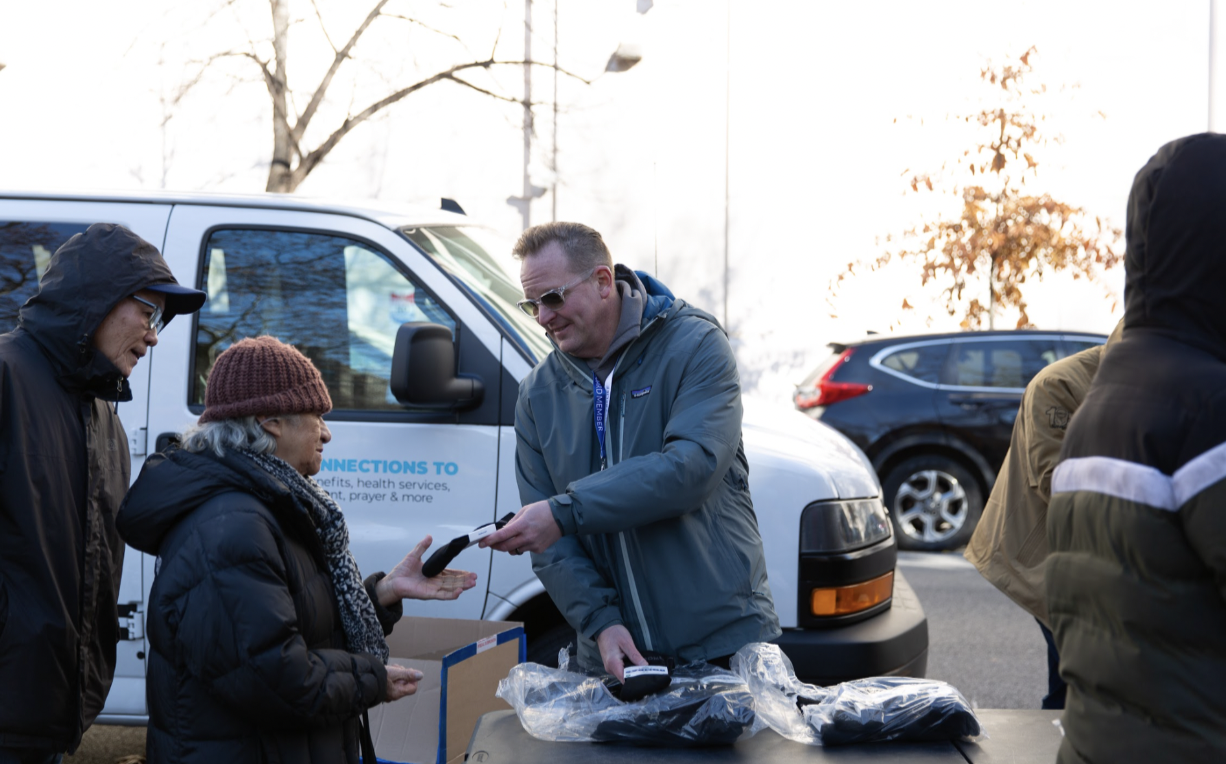
And people walking through that kind of season often can't even muster the strength to ask for help. That's why, at City Relief, we don't wait for people to come to us. We move toward them—with compassion, generosity, and the conviction that their lives hold intrinsic, God-given value.
Isn't that the heart of the Christmas story?
According to Christian tradition—and what I personally believe—God did not wait for humanity to climb its way back to Him. He moved toward us. He stepped into our vulnerability. In the birth of Jesus, we see a blueprint for compassion: draw near to those who feel unseen, move closer to those who are hurting, bring light to places the world overlooks. As Matthew 1:23 says:
"Look! The virgin will conceive a child… and they will call him Immanuel, which means 'God is with us.'"
This week, as you navigate your beautifully chaotic December routines, I invite you to take on that same posture. Notice someone you might normally pass by. Offer eye contact. A greeting. A moment of connection. Not because it fixes everything, but because love moves first—and loneliness loosens its grip when someone is finally seen.
And in the words of the great philosopher, Bono:
“God is in the slums… God is in the debris of wasted opportunity and lives — and God is with us if we are with them.”
Thanks for reading,
Josiah Haken
City Relief, CEO