
The Power of Not Walking By
Last week, we talked about the loneliness that comes from being invisible, and how the Christmas story calls us to a kind of compassion that doesn’t wait for someone to ask for help.
This week, I want to go a step further and talk about how loneliness is interrupted not just by noticing people who are struggling, but by choosing to engage with them.
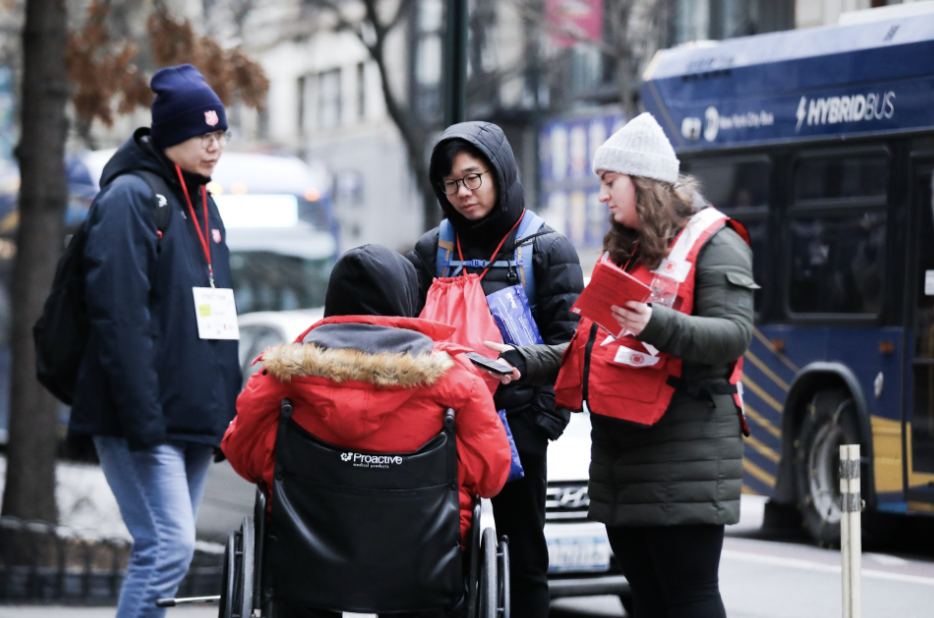
One of the most meaningful events I participate in each year is Don't Walk By, an annual collaborative effort hosted by City Relief alongside The Bowery Mission, Hope for New York, and The Salvation Army. On February 28th, hundreds of volunteers will once again take to the streets of Manhattan—not to rush past people in need, but to stop and respond.
The event is inspired by one of the most provocative stories Jesus ever told: the parable of the Good Samaritan.
In the story, a man is beaten and left for dead on the side of the road. Two religious leaders—people who knew the scriptures and should have known what love requires—see him and intentionally avoid the possibility of engagement. They were busy. Distracted. Focused on where they were headed rather than who was right in front of them.
Then Jesus introduces a Samaritan. For his audience, this would have been scandalous. Think of the most disreputable person you can imagine and multiply it by ten. Unlike the respected men who noticed the suffering and moved on, the Samaritan stops. He kneels beside the man, takes responsibility for his care, and restores his dignity.
That's what Don't Walk By is all about: refusing to let someone's suffering become background noise.
Because homelessness doesn't just strip people of housing, income, or stability; it severs connection. It disconnects people from neighborhoods, coworkers, churches, family rhythms, and traditions—the everyday relationships that remind us we belong.
At City Relief, we work to restore that sense of belonging every time we show up. On sidewalks in Harlem, Chelsea, the Bronx, Newark, and Paterson, we create small pockets of refuge—places where people are greeted by name and treated with dignity. Not because we believe we can fix everything, but because reconnection is often the first essential step toward restoration.
If you've never participated in Don't Walk By, I encourage you to sign up. Volunteer spots fill up quickly for a reason. Stopping changes you. It interrupts the instinct to rush and reminds us that compassion is rarely convenient—but it is always transformative.
As you move through this season, my invitation is simple: don't walk by. Not the person on the corner, the coworker who seems disconnected, or the neighbor who's quietly struggling. Choose presence over pace. Choose connection over comfort.
Because loneliness loosens its grip when someone realizes they haven't been forgotten.
Thanks for reading,
Josiah Haken
City Relief, CEO