
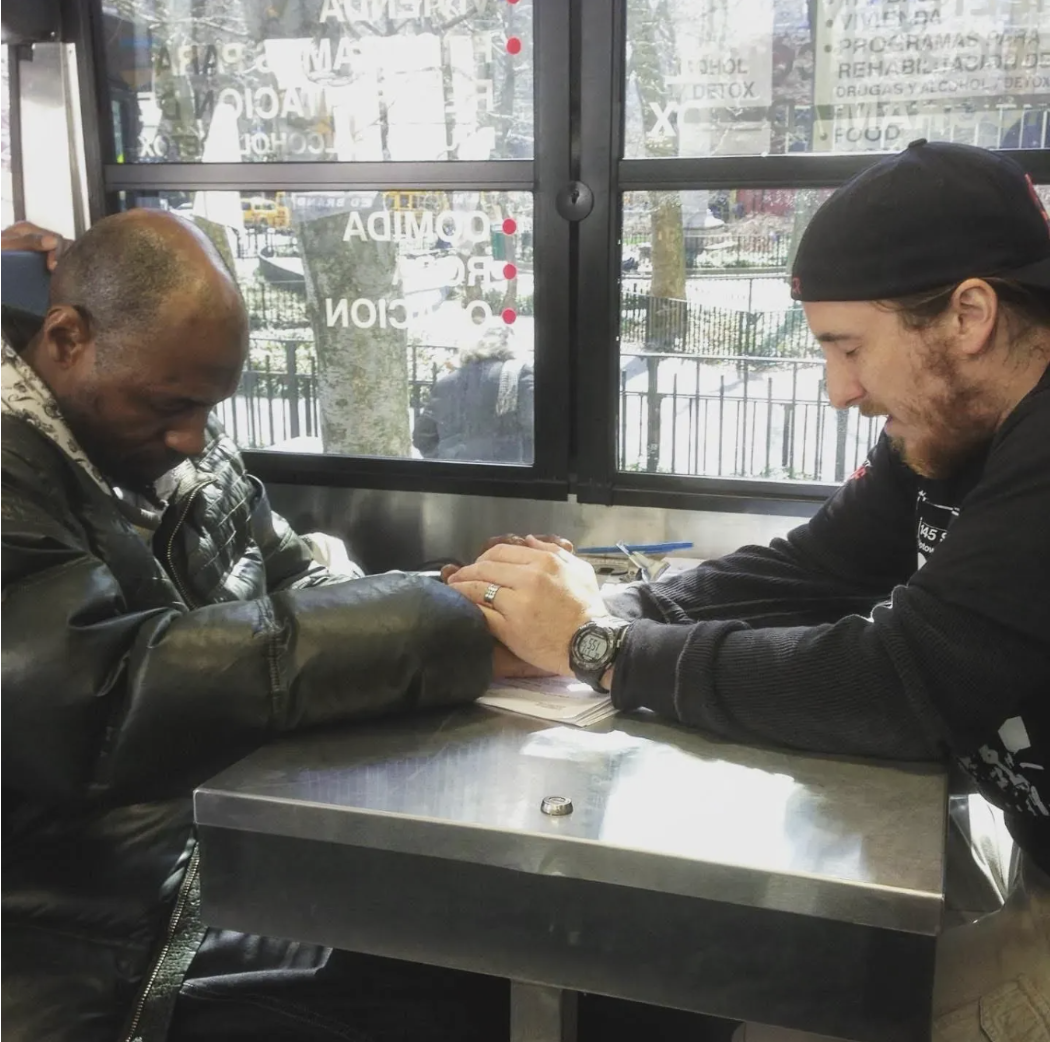
Richard was a Black South African man who drank way too much. But it took walking a mile with him before I understood why.
When I first met him in 2010, someone suggested we connect because we had both grown up in Africa: me in Cameroon, him in South Africa. He was in his fifties or sixties, with a thick accent and the perpetual aroma of beer. Having grown up under apartheid, he had experienced racism and oppression in ways I could hardly imagine.
He came to our Chelsea Park outreach almost every week. At first, our conversations stayed fairly superficial. Eventually, he opened up about his older brother, his “hero.” Richard described himself as the “screwup.” His brother was the reliable family man who held everything together.
Then, during a particularly vulnerable conversation, Richard told me something I’ll never forget.
With tears streaming down his face, he described staying at his brother’s home when armed white soldiers broke in and opened fire. Richard instinctively hid under his bed, a decision he deeply regretted. He listened as his brother, sister-in-law, nieces and nephews were killed, unable to do anything to stop it.
Something inside him died that day too.
Richard had always loved music, especially the piano, but after losing his family, playing never felt the same. A few years later, he moved to the United States, hoping for a fresh start. The memories followed him across the ocean.
So he drank to forget.
I remember his tears and feeling completely out of my depth. What could I possibly say to a man who had spent years trying to drown his trauma one beer at a time?
So I listened. It felt painfully inadequate, but I couldn’t undo what had happened or say anything to make it better.
Richard remained a regular at our outreach, and when he was sober enough to remember me, we had some great interactions. I tried to get him talking about the piano or find a way to make him smile.
Sometimes I brought up detox or rehab, hoping there might be a next step he was willing to take. Once, I even offered him a list of temp agencies where he might find work “on the books.”
I think about Richard when I hear someone ask why people experiencing homelessness don’t just stop drinking or make better choices. The idea that everyone experiencing homelessness struggles with addiction is a misconception. But when addiction is part of someone’s story, our judgment often leaves little room for the trauma behind it.
I wanted Richard to get help too. Understanding his pain didn’t make his drinking harmless, but it changed how I understood what I was asking him to overcome.
Anyone walking past Richard could see that he was drunk and probably homeless. Understanding why required walking with him long enough to hear his story; and everyone has one.
I believe that’s part of what Jesus asks of us when he says to “love our neighbors as ourselves.” I know it’s messy, but getting close enough to find out what pain someone is carrying is often the best way to help them take the next step.
We can’t promise how every story will end. But together, we can make sure our homeless neighbors don’t have to face the next chapter alone. If you’d like to walk a mile with us or those we serve, go to cityrelief.org to find out how.
With gratitude,
Josiah Haken
City Relief, CEO
