
Lessons From Kilimanjaro - Why I Climbed Africa’s Highest Mountain (Week 1)
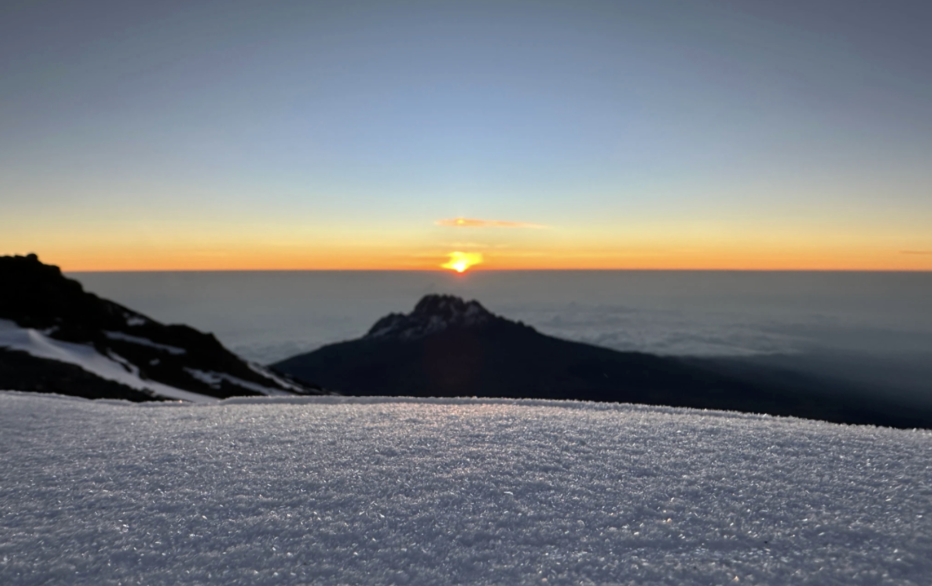
I didn't climb Mount Kilimanjaro because I needed an adventure.
I climbed because I lead an organization that depends on generosity.
When a group of nonprofit leaders invited me to join a fundraising expedition up Africa's highest peak, I saw it first through a strategic lens. If shared challenge inspires generosity, maybe this could help more people move from crisis toward stability. Maybe it could open doors. Maybe it could strengthen City Relief's work across New York and New Jersey.
That was the surface reason.
But there was something deeper too.
I was born in Yaoundé, Cameroon. I left Africa when I was fourteen and hadn't returned to the continent since. The idea of standing on the rooftop of Africa decades later stirred something personal.
So I trained — or at least I told myself I did. I packed meticulously, flew through Doha, and landed in Tanzania. And a few days later, with ten other climbers, I took my first steps up a mountain that would become one of the hardest and most meaningful journeys of my life.
Over six days we climbed through rainforest, moorland, alpine desert, and arctic summit. We navigated hail, altitude, exhaustion, and the thin line between pressing forward and turning back. We reached Uhuru Peak at 19,341 feet just after sunrise, and then descended almost immediately.
The summit was breathtaking. But that wasn't the point.
What surprised me most wasn't the physical challenge. It was how clearly the mountain mirrored the work we do every week on the streets of New York and New Jersey.
On Kilimanjaro:
No one summits alone.
You acclimatize by climbing high and sleeping low.
Strength has limits.
Weather changes without asking permission.
And sometimes the only way down is up.
In our work with neighbors navigating homelessness, I see those same realities:
There isn't one staircase out of crisis. There are routes.
Progress isn't linear.
Stability requires shared weight.
And the difference between standing and being carried is often thinner than we admit.
I came home physically exhausted, but spiritually transformed.
The mountain exposed my illusion of self-sufficiency. It clarified what I've been preaching for years but only partially embodied, which is that stability is communal architecture.
Over the next 4 weeks, I want to process some of those lessons with you. Not as travel stories or as highlight reels, but as reflections on fragility, leadership, discernment, justice, and shared responsibility.
Each week, I'll share one mountain moment and one clear takeaway, and connect it to what we're seeing in our work at City Relief.
Next week, I'll tell you about the storm and the moment I couldn't stop shaking.
Pole, pole. Slowly, slowly.
Thanks for reading,
Josiah Haken
City Relief, CEO