
Lessons from Kilimanjaro - What a Storm and a Lost Bag Taught Me About Vulnerability (Week 2)
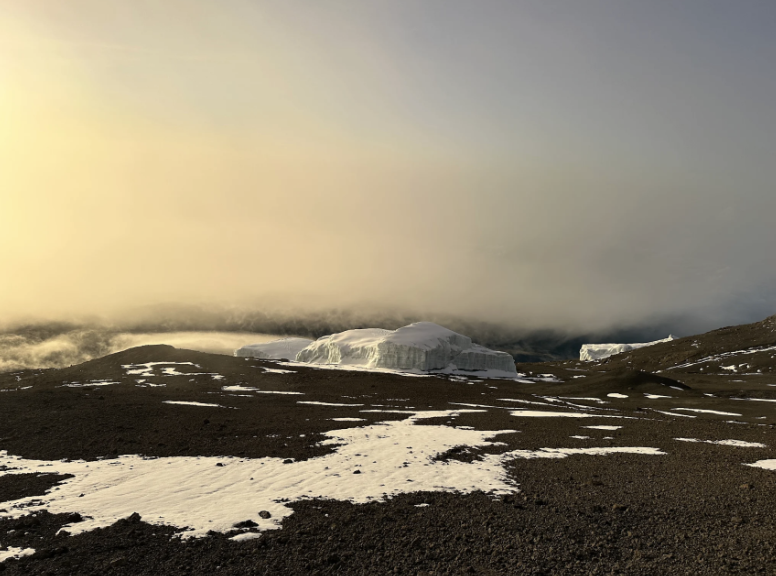
Last week I wrote about rhythm — how the mountain forces you to slow down.
This week is about the storm.
We had reached Machame Camp after seven steady hours through the rainforest. Mist hung in the air. About 9,800 feet up. Cool, but manageable. We ate hot soup in the mess tent — one of Kilimanjaro's quiet miracles.
That night Derrick smiled and told us the next day would be an easier day. Not for me.
The rainforest gave way to moorland the next morning — wider skies, sharper air. The incline was more aggressive. My legs were struggling to keep up. Then the sky shifted.
Rain started lightly. Then wind. Then a temperature drop you could feel in real time. When we crested the high point, our guide's posture changed. His pace quickened. It felt like we were racing the storm.
We lost.
Rain turned cold and relentless. The trail slick. Wind sideways. By the time we reached camp, we were soaked. Then hail began — hard pellets ricocheting off nylon and rock.
Inside the tent was dry and I was grateful to be out of the storm.
Until I realized my duffel bag with all my warm clothes and my sleeping bag wasn't there.
At first it felt inconvenient. Then my body started shaking. Full-body, teeth-chattering, hands-uncontrollable shaking.
All my preparation — the layers, the hand warmers, the careful packing — meant nothing if I couldn't access it.
One of the guides popped his head into my tent to check on me. He took one look at me and turned around after saying he'd be right back.
He returned 5 minutes later with borrowed layers and a sleeping bag.
"Change. Now."
My fingers barely worked. I climbed into the sleeping bag, still shaking.
Then Derrick, our team leader, came in and sat down in front of me with hot stew, hot tea, and a hot water bottle to press against my chest.
He didn't just hand me the bowl of hot beef stew he brought with him. He fed me. Slowly. Patiently. As I lifted my hands to steady the bowl, I noticed them for the first time. Red. Shaking. Dirt under my fingernails from the climb.
I recognized those hands from years of serving unhoused men and women in the streets of New York City and New Jersey.
Shaking, cold, cracked, with dirt pressed into the lines of skin. I've listened to stories from men and women whose bodies were shaking not from altitude, but from exposure. From exhaustion. From hunger.
Usually, I'm the one serving the soup. Usually, I'm the one steadying the bowl.
But in that tent, at altitude, I wasn't the CEO.
I wasn't the Outreach Leader.
I wasn't the one carrying anything.
I was the one being carried.
And being carried feels vulnerable. Almost humiliating. Until you realize it is the very thing keeping you alive.
Eventually my duffel arrived — the porter had protected it during the storm but couldn't find our tents in the chaos. I tore it open and layered up with everything I had. Slowly — pole pole — the shaking eased.
The storm passed. The mountain looked unchanged. But I wasn't.
Because I now understood that exposure erodes strength faster than we think.
When you're living outside, one storm can undo weeks of effort. One soaked sleeping bag. One stolen backpack. One freezing night. One missed connection. One lost document. Stability is fragile when you're exposed.
And sometimes what looks like weakness is simply a body trying to survive.
I used to think of our work primarily as helping carry others upward. But the mountain reminded me: none of us are as self-sufficient as we imagine. At altitude, warmth is not a luxury. It is mercy.
And mercy almost always arrives in the form of another person.
A guide who changes pace.
A friend who gives you their sleeping bag.
A steady hand that feeds you when yours cannot steady themselves.
No one summits alone, and no one survives the storm alone either.
More next week.
Thanks for reading,
Josiah Haken
City Relief, CEO