
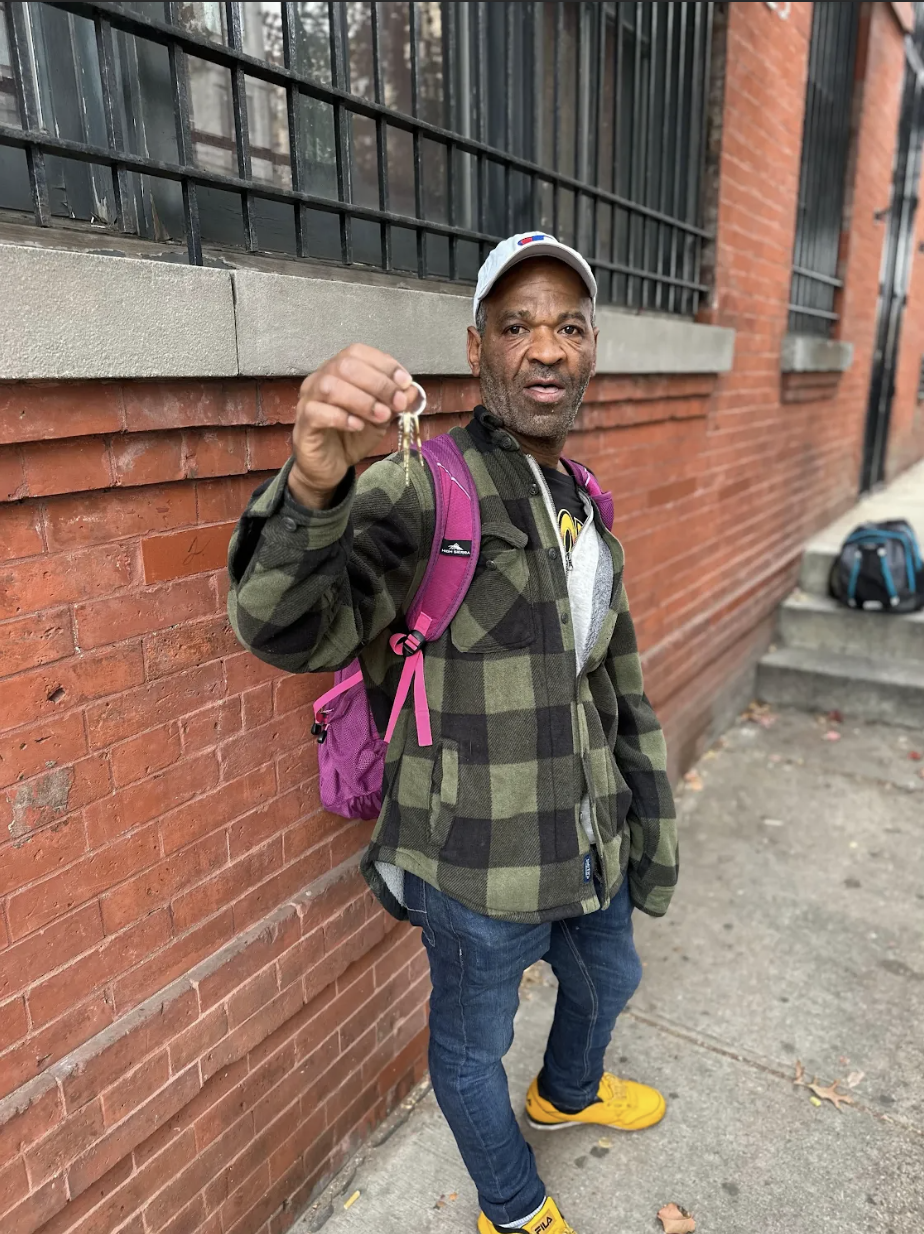
Rafael is a short man from the Dominican Republic with a disability that left one arm unusable and caused him to walk with a limp. His English was spotty at best, and while his thick Dominican accent made his Spanish difficult to understand as well, he made one thing abundantly clear: his favorite outreach leader wasn't me. It was a colleague of mine named Johanna.
Originally from Finland, Johanna joined what was then called New York City Relief in 2001 as an intern. Between his Spanish and her Finnish, you might wonder how they became friends. But by the time I arrived in 2010, Rafael had eyes for no one else.
Eventually, he realized that while I was clearly less interesting than Johanna, my proficient Spanish at least made me useful.
Every week, he asked me for two or three black contractor bags which I gladly gave him. He spent hours each day collecting discarded plastic bottles and cans, dragging them through the city before turning them in for cash. Rafael was a fixture at our outreaches for decades.
Then COVID hit. We lost touch with a lot of our guests. Some left the city. Some moved into hotels. Others passed away. When Rafael stopped coming, I hoped for the best. But honestly, I feared the worst.
Which is why, one Saturday in the South Bronx, it took me a moment to recognize his familiar voice calling my name.
He looked amazing! He wasn’t dragging a huge bag of bottles and cans behind him. And naturally, his first priority was finding out how Johanna was doing.
I told him she was back in Finland, raising children and working with people experiencing homelessness in Helsinki. He insisted I send her his greetings.
"You look great," I told him. "Where are you staying?"
With great joy he told me that he had an apartment around the corner. I must have looked skeptical, because he reached into his pocket and pulled out his keys as proof.
I was thrilled! After so many years, Rafael had a door he could lock. A place of his own.
Can I confess something? Sometimes it's hard to feel like we’re making a difference. Yes, we absolutely see people find housing, treatment, and opportunities that change their lives. But we don’t always see what happens next.
Someone stops coming to our outreach, and we are left to wonder what happened. Not everyone who gets their first house keys in twenty years comes back to tell us about it. And when they do, we can't always draw a straight line between our efforts and their opportunities.
That's part of what To Walk a Mile means to me. We may only get to accompany someone through one stretch of a much longer journey. We can offer practical help and friendship without knowing whether or not we’ll witness the miracle of someone moving from crisis to stability.
I don’t know what role Johanna's friendship played in helping Rafael keep going when he was living in the streets. But standing there with his keys, he wanted her to know that she played a part in helping him get there.
Who are you walking a mile with right now?
Because even if you never see someone cross the finish line, learning their name, listening to their story, and doing what you can with what you have can help them take the next step.
With gratitude,
Josiah Haken
City Relief, CEO
