
WEEK 4: Why Counting Homelessness Isn’t the Same as Ending It
Part of the challenge in addressing homelessness is that many of our public conversations focus on managing the most visible effects of the crisis rather than understanding the deeper systems that keep people stuck in it. In city halls, community board meetings, and policy discussions across the country, the way we measure the problem often shapes what we believe is possible in responding to it.
One clear example is the annual Point-in-Time (PIT) count. Nearly every municipality conducts this count each January, and it has become a central data point for determining federal, state, and local funding.
The PIT count captures how many people are experiencing homelessness on a single night. Volunteers and nonprofits canvas communities, count shelter beds, and tally those numbers into an "official" figure. This effort reflects real care and commitment, and it's certainly better than having no data at all, but it also has important limitations.
A one-night count doesn't capture the full picture. It misses the many people who cycle through shelters over the course of a year. It often excludes families living temporarily in hotels, motels, short-term rentals, or rehabilitation programs. And it frequently overlooks people sleeping in cars or staying temporarily with friends or relatives—people who are housing-insecure but not easily visible.
In 2024, the PIT count reported 771,480 men, women, and children experiencing homelessness on a single night in January—an 18% increase over the year before. Yet most housing experts agree this number significantly underestimates how many people experience homelessness over time. When looking at annual flow data, estimates rise to 3.5–4 million people nationwide who experience homelessness at some point during a year.
It's also important to acknowledge that we rely so heavily on one-time counts because they're easier.
Tracking visibility on a single night is administratively straightforward. Measuring progress over time is much more complex. It requires follow-up across months or years, coordination between fragmented systems, and investment in data, case management, and evaluation, often without the funding or infrastructure to support that work well. Many communities and providers are already stretched thin, doing the best they can with limited resources.
Recognizing that reality isn't a criticism. Rather, it's about honesty and possibility.
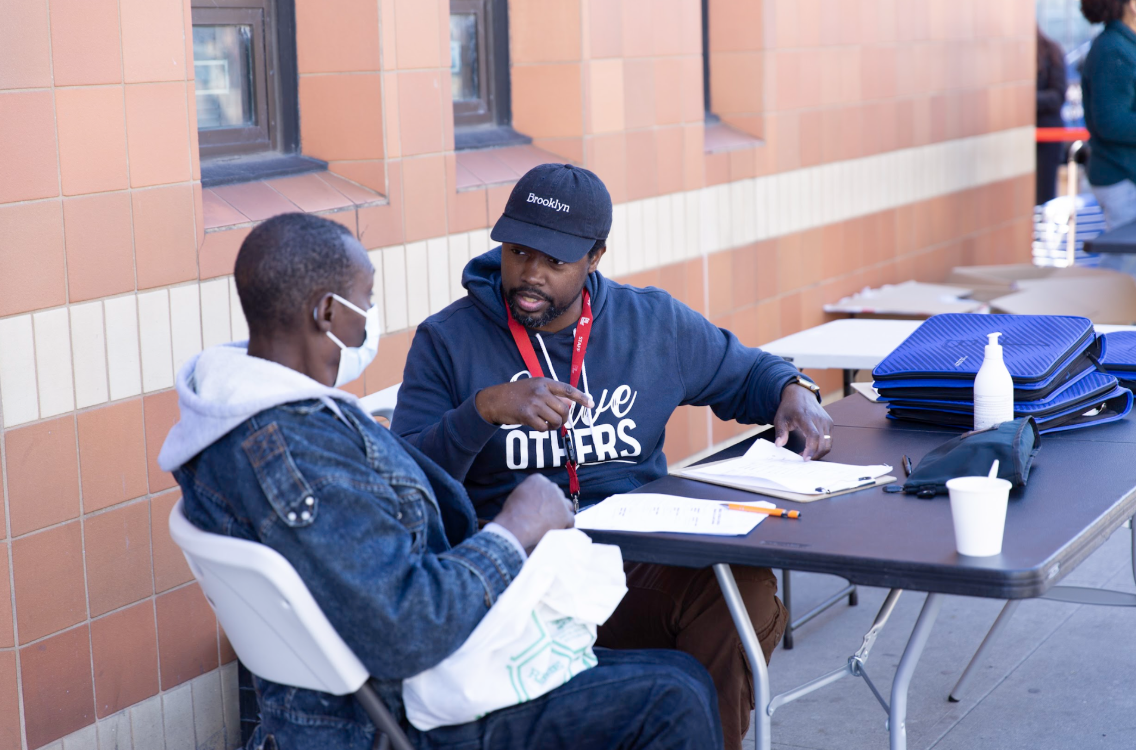
This is why we're continuing to evaluate how we define and measure "success" at City Relief. We still count meals served and socks distributed because meeting immediate needs matters. But we're also increasingly focused on meaningful conversations, which are harder to quantify.
We want to know how many people we're able to sit with long enough to talk about next steps toward stability. We want to understand what obstacles stand in the way of someone's progress and then offer a thoughtful strategy for navigating those barriers together.
The piece we haven't fully solved yet, but are deeply committed to working toward, is how to measure which referrals actually lead to stability, and why. We want to identify the trends and pathways that truly help people move from crisis toward home, so we can invest more deeply in what works.
This is especially difficult in a low-barrier service model. We intentionally keep our metaphorical front door as wide open as possible so that anyone can walk in and get help—no paperwork, no prerequisites, no hoops to jump through. That openness is essential, but it also makes long-term tracking more complex.
Still, complexity doesn't mean it isn't worth pursuing.
If our shared goal is not just to manage homelessness, but to reduce it, then our measurements and our learning have to keep evolving. Alongside counting who is still in crisis, we need to pay attention to who is finding stability, what helped them get there, and how we can make those pathways more accessible for others.
Most people experiencing homelessness don't want to be counted; they want to be done. Done surviving, cycling, and starting over.
Our hope is that, little by little, our work and the way we measure it moves in that same direction.
Thanks for reading,
Josiah Haken
City Relief, CEO