
How Does Someone Serve Their Country and Still End Up Homeless? Week 1
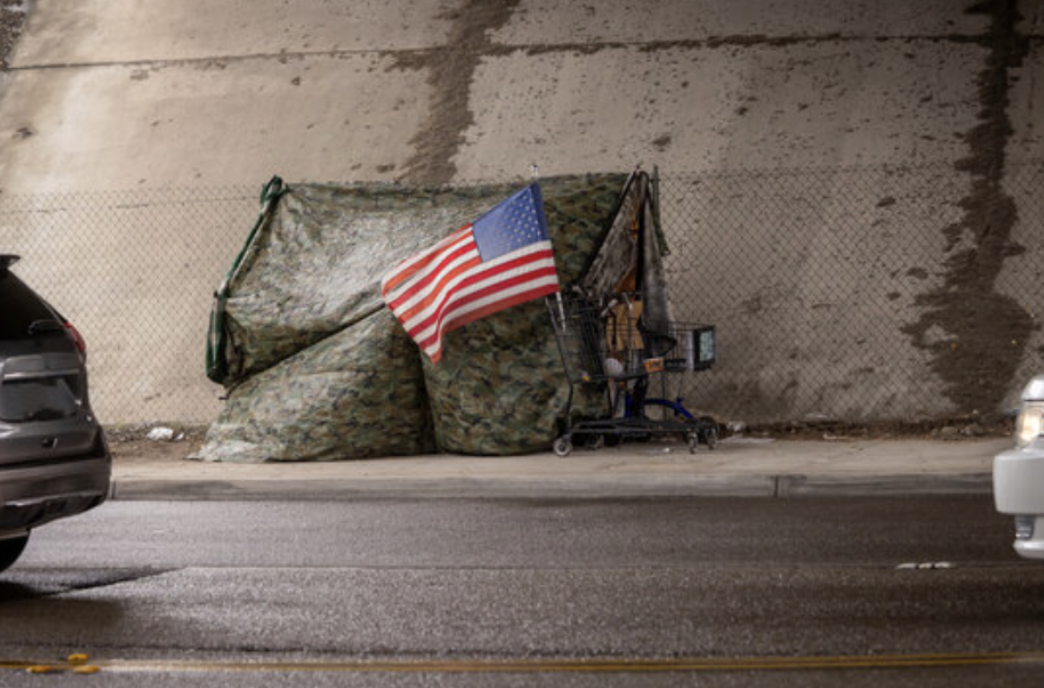
A few years ago, I was sitting on a sidewalk in New York City talking with a man who had served in the military. As we spoke, he told me about his years of service, the places he had been stationed, and some of the challenges he faced after returning home. He wasn’t looking for sympathy. He wasn’t angry. In many ways, he was simply trying to survive another day.
What struck me most wasn’t his story. It was the question his story raised. How does someone serve their country and still end up homeless?
Over the next few weeks, I want to explore that question.
Veteran homelessness occupies a unique place in the American conversation about poverty and housing. Nearly everyone agrees that veterans deserve our support. Across political parties, faith traditions, and communities, there is broad consensus that the men and women who served our country should not be left behind.
And to be fair, we’ve made remarkable progress. Since 2010, veteran homelessness has been cut by more than half nationwide! Communities across the country have invested in housing programs, healthcare services, outreach efforts, and supportive resources specifically designed to help veterans regain stability. Tens of thousands of veterans are connected to permanent housing every year. Those are real victories, and they deserve to be celebrated.
But one of the reasons I want to spend time on this topic is that veteran homelessness is about more than veterans. While this series will focus specifically on the experiences of those who served our country, I believe veteran homelessness offers important lessons about homelessness more broadly. In many ways, it provides a window into both what is working and what is still missing in our efforts to help people move from crisis to stability.
Because the story doesn’t end there. On any given night, tens of thousands of veterans remain homeless in the United States. Some are sleeping in shelters. Others are staying in vehicles. Some are moving from couch to couch. Others are living outdoors, hidden in plain sight.
At City Relief, we meet veterans every week. We’ve met veterans struggling with disabilities. Veterans battling illness. Veterans trying to reconnect with family. Veterans who worked hard their entire lives before a job loss, medical crisis, divorce, or rising housing costs pushed them into instability.
And one thing I’ve learned after fifteen years of street outreach is that homelessness is rarely as simple as people imagine.
Many of the veterans we meet are not disconnected from help because they don’t qualify for services. In fact, some qualify for housing, healthcare, benefits, and support. The challenge is often something else entirely. The challenge is access. It’s the gap between a program existing and a person being able to successfully navigate their way to it.
It’s the distance between a housing voucher and an apartment. Between an appointment and reliable transportation. Between a benefits application and the paperwork required to complete it. Between needing help and knowing where to begin.
In the coming weeks, we’ll take a closer look at those gaps and the practical barriers that continue to stand between many veterans and the support available to them. Additionally, we will be publishing the second installment of our monthly mini-documentary specifically on veteran homelessness in the coming days. If you’re interested in watching that please subscribe to our YouTube page here.
Because if we’re serious about ending veteran homelessness, we need to understand not only what services exist, but what it actually takes for someone to access them.
And sometimes, the distance between homelessness and home is much shorter—and much more complicated—than most of us realize.
With gratitude,
Josiah Haken
City Relief, CEO
