
One Size Does Not Fit All - Our Efforts Week 3
One of the things that makes our work at City Relief so difficult to quantify is that no two experiences of homelessness are the same. I often remind people in training sessions that every person we meet brings a different story, and that story shapes what stability actually looks like for them.
The path forward for a man in his forties whose marriage fell apart isn’t the same as it is for a senior trying to survive while the cost of living keeps rising faster than their fixed income can handle. And it certainly isn’t the same for a young person who just aged out of the foster care system with nowhere stable to land, as it is for a woman fleeing a domestic violence situation with little more than the clothes on her back.
And yet, despite that complexity, we keep reaching for overly simplistic solutions to a problem that clearly isn’t one-size-fits-all.
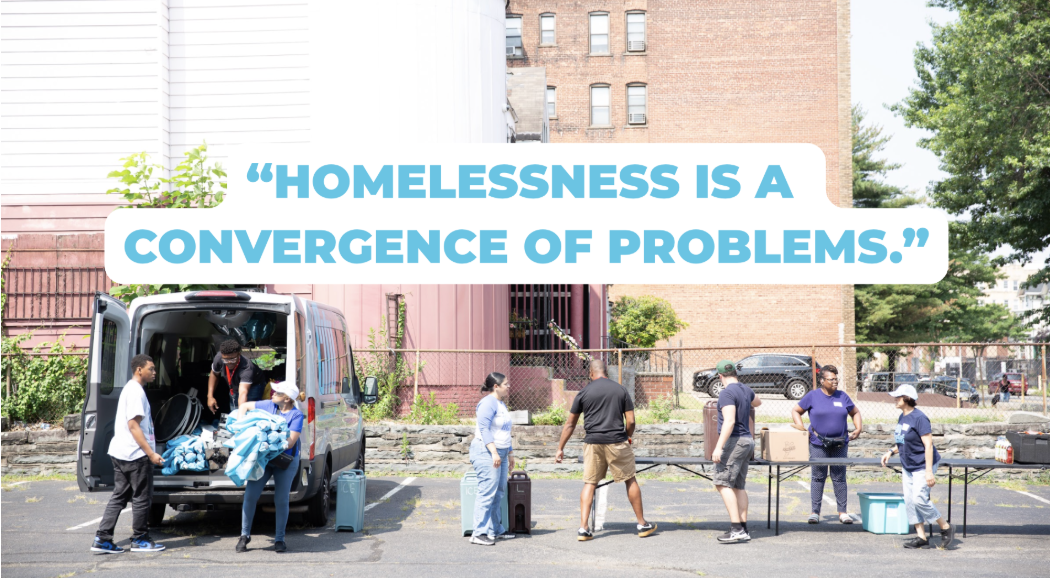
Homelessness is a convergence of problems. An ocean fed by many rivers, mainly rising housing costs, health challenges, employment gaps, addiction, mental health, and broken systems that quietly fail people over time.
And yet, we keep trying to tackle it with strategies that compete with each other instead of complementing each other. But what’s even more concerning is how we’re choosing our “solutions.” Across the country, the approach any given municipality takes often has less to do with what the data says works and more to do with political ideology and stigma.
In other words, we’re not just dealing with a complex crisis, but also dealing with competing worldviews about how to respond to it.
Broadly speaking, most homelessness policy in the U.S. falls into three camps:
Housing First – placing people into permanent housing as quickly as possible, then wrapping services around them afterward.
Shelter First – getting people indoors immediately through emergency shelters or transitional housing as a pathway toward stability.
Enforcement First – using laws and policing to regulate public space, often making it illegal to sleep or camp in certain areas.
Each of these approaches is rooted in something real and addresses a piece of the problem. And each tends to be embraced by different parts of the country, not just because of need, but because of beliefs about personal responsibility, government, public safety, and what it means to care for your neighbor (let alone which neighbors deserve care and which ones don’t).
That’s where things start to break down. Instead of asking, What combination of strategies actually leads to long-term stability? we default to, Which approach aligns with how I already see the world?
And that framework shifts the conversation entirely.
Housing advocates point out and rightly so, that without housing, homelessness doesn’t end. Shelter advocates push back, also rightly, that you can’t wait years for housing while people are suffering outside tonight. Enforcement advocates raise concerns, not without reason about the impact of visible homelessness on communities.
But instead of building something integrated, we end up talking past each other and defending partial solutions while reinforcing systems that were never designed to carry the full weight of the crisis.
So over the next few weeks, I want to slow this down to take each of these approaches seriously on their own terms. We’ll look at what each one gets right, where each one falls short, and why different parts of the country have gravitated toward one over the others.
If we’re going to make real progress, we need a shared understanding of what actually works, and the humility to admit where our preferred solutions might not be enough.
Next week, I’ll start with Housing First.
With Gratitude,
Josiah Haken
City Relief, CEO
