
How a Story About Starfish Tells the Tale of Homelessness. Our Efforts Week 2
A few weeks ago, I was having breakfast with a longtime donor, and we found ourselves circling a familiar frustration: it feels like all the money New York City is spending on homelessness isn’t actually making a dent.
I get why it feels that way. A recent Washington Post headline said it plainly: Spending More Money on Homelessness Isn’t Helping.
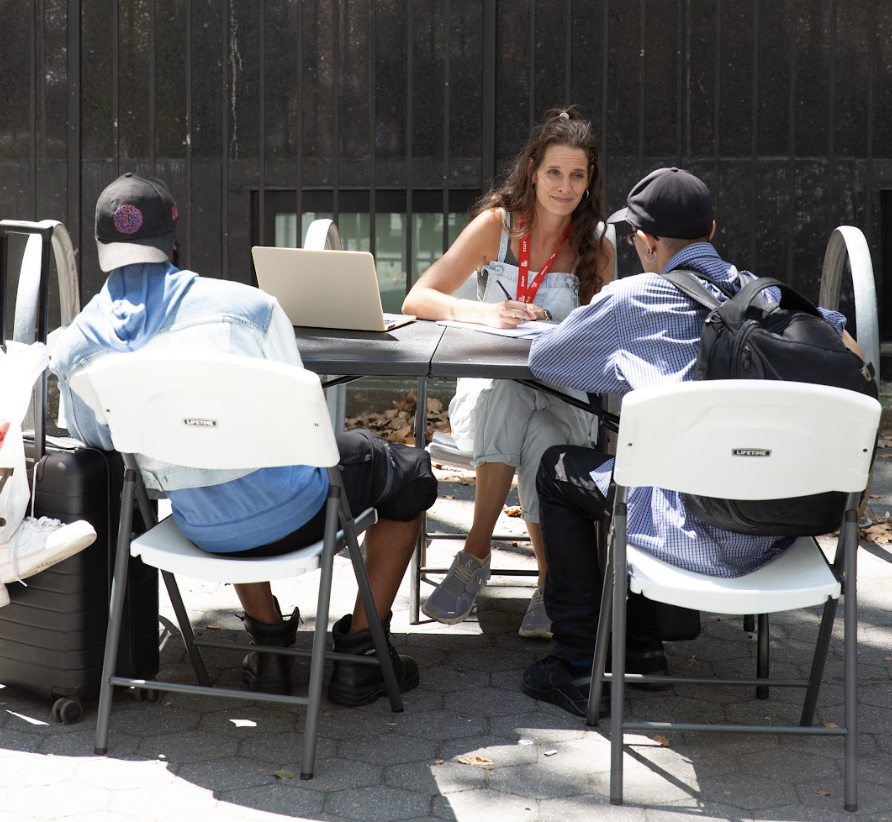
In March of 2025, City Relief was pushed out of our weekly outreach location on 14th Street in Manhattan. A local developer threatened our partner with a cease-and-desist, arguing that our two-hour pop-up was attracting more people experiencing homelessness than it was helping transition into stability.
Setting aside the fact that we go where people already are, that’s the whole point, I understand the perception. If things don’t feel like they’re improving at a macro level, it’s hard to see what’s actually happening on the street.
And that tension points to something deeper.
New York City is spending billions each year on homelessness. Roughly $8 billion are spent across shelters, outreach, housing, and support services. Spending on unsheltered homelessness alone has more than tripled, from about $102 million in 2019 to around $368 million in 2025.
That’s a massive increase… and yet the number of people living on the streets has still grown.
So the question people are asking isn’t crazy: Why doesn’t it feel like it’s working?
At City Relief, we can help hundreds of people access support and resources and still, to the outside world, it can look like nothing is changing. Because for every person who finds a path forward, others are falling into the same gaps right behind them, often faster than we can help people climb out.
You’ve probably heard the starfish story, the boy throwing stranded starfish back into the ocean. A man tells him he’s not making a difference. The boy tosses one back and says, “I made a difference for that one.”
It’s a powerful story. But it breaks down if, just down the beach, there’s a constant stream of new starfish washing ashore for every one that gets thrown back.
That’s what we’re up against.
No matter how effective service providers are at the individual level, the work will always feel insufficient if the systems driving homelessness remain unchanged. As long as we operate as a patchwork of well-meaning efforts, we’ll struggle to see the kind of progress we’re actually fighting for.
We need more people throwing starfish back into the ocean. And we need to stop feeding the systems that keep placing more starfish on the beach, often faster than we can return them to the water.
Right now, we’re mass-producing starfish. Rising housing costs, fragile safety nets, health challenges, and bureaucratic barriers are all pushing more people into crisis. And our polarization, our disagreements about who’s responsible and what should be done, has created competing strategies that often work against each other instead of together.
There’s a role for all of us in addressing homelessness. But it’s going to require humility and a willingness to take some risks. Especially for those of us whose livelihoods are tied to this work. If we want to see lasting change, we may need to hold our roles a little more loosely.
Because if we don’t, we’ll keep doing good work that never quite adds up to the outcome we’re all hoping for.
Next week, I’ll break down the three main philosophical approaches Americans take to addressing homelessness and why they often trip each other up instead of working together.
With Gratitude,
Josiah Haken
City Relief, CEO
