
The power of giving yourself for the sake of someone else
We live in a culture that celebrates self-sufficiency. Figure it out. Handle your own problems. Don’t ask for help. It sounds like strength. It even feels right sometimes. But on the streets, that idea doesn’t last very long.
One Friday in Harlem, I was helping someone with a referral when a fight broke out right next to me. One man accused another of talking to the police. Within seconds, it escalated—shouting, then a punch, then chaos. And I froze. Clipboard in hand. Blood on the page. I didn’t step in. I didn’t know how. But someone else did.
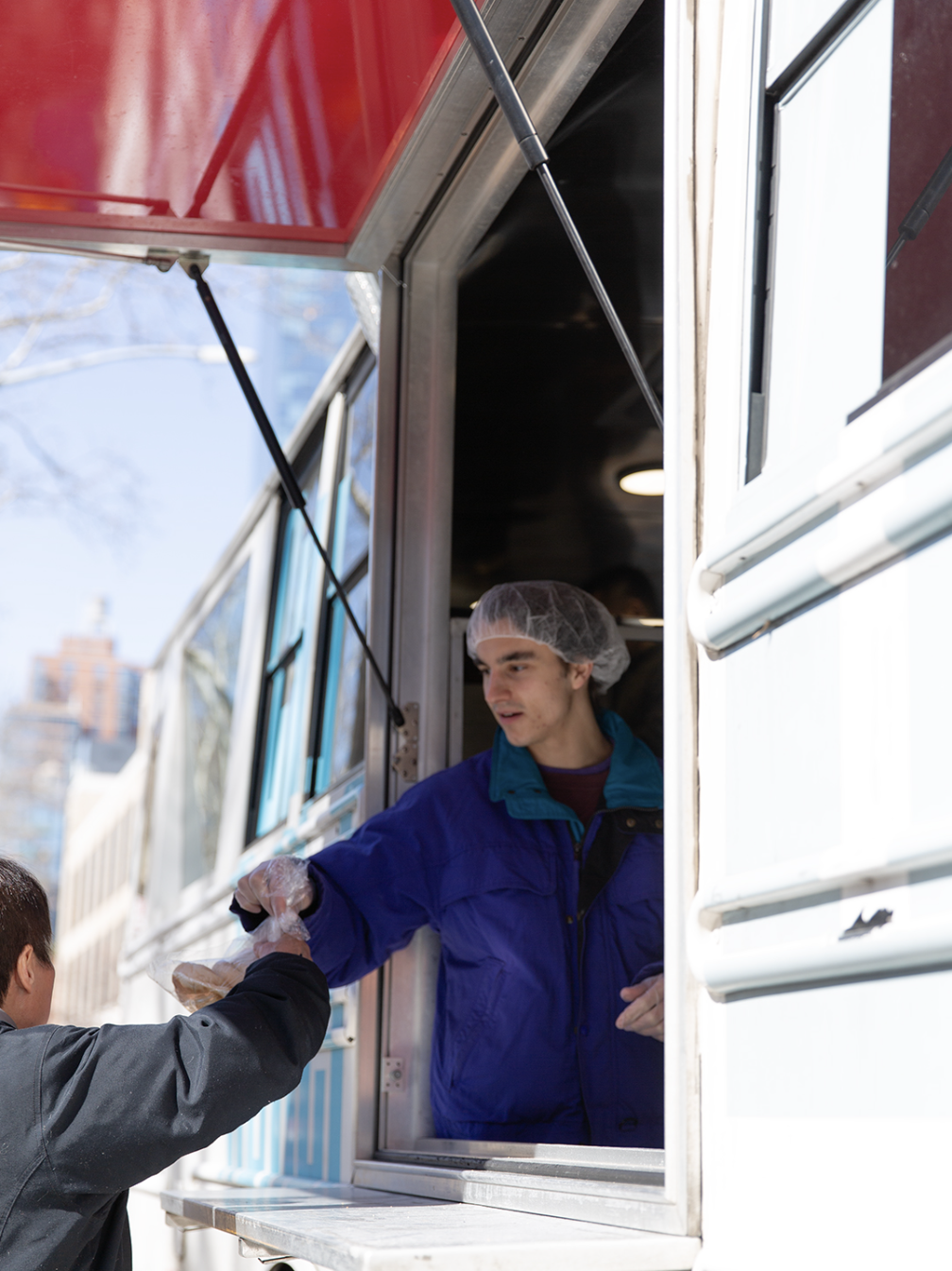
Like a scene out of The Dukes of Hazzard, one of our volunteers—Sean—jumped over the counter of the Relief Bus and physically separated the two men. He put himself right in the middle of it.
He absorbed the risk. He stepped into the mess. He did what I couldn’t do in that moment. The next day, the man who started the fight came back—head down—asking if we could talk.
“I’m sorry,” he said.
He told me about his struggle with addiction. About losing his mom—his only support system. About how he lost his housing overnight when she died. And how the day before had simply been the tipping point. I asked him if he wanted help.
“More than anything.”
And in that moment, something shifted. Not because he figured it out on his own. Not because he suddenly became self-sufficient. But because he was willing to receive help—and because someone else had been willing to step in.
That’s the part we don’t talk about enough. Real change almost always involves someone else. Someone who shows up. Someone who gives something. Someone who steps in when things fall apart.
That’s what I think about when I think about Good Friday. Christians remember it as the day Jesus was executed—God in the flesh, unfairly killed by the state. There is nothing about that moment that is “good” on its own. It’s the epitome of cruelty and injustice.
But Good Friday isn’t a rebrand of a terrible event. It’s the story of a God who refused to abandon His creation and leave us to pull ourselves up by our nonexistent bootstraps.
Where our instincts push us toward self-preservation, Good Friday shows us a different kind of power: The power of stepping in. The power of absorbing cost. The power of giving yourself for the sake of someone else.
I’ve seen glimpses of that kind of love again and again—on the streets, in our volunteers, and in people who give their hard-earned money so City Relief can continue to show up for neighbors who can’t repay them.
And if I’m being honest… I think a lot of us feel the tension of this right now. There’s a quiet fear just beneath the surface—financial pressure, global uncertainty, a sense that things are getting harder by the day. And when that fear creeps in, our instincts are almost automatic: Protect what’s mine. Hold a little tighter. Look out for myself first.
I feel it too.
But what I’ve seen—on the streets and in my own life—is that when we live that way, something in us starts to shrink.
Because we weren’t made just to survive. We were made to love. To give. To show up for one another. And paradoxically, it’s often when we step outside of ourselves—when we choose generosity over fear, when we fight for the good of someone else—that we feel most alive.
What Jesus shows me is this: we don’t find safety in self-preservation—we find our purpose by laying down our lives.
Good Friday doesn’t ignore the darkness. It steps right into it—and shows us that love, even costly love, is still stronger than death.
And maybe that’s the invitation for all of us: Not just to get through this moment…But to be the kind of people who step in, give something up, and help carry one another through.
With gratitude,
Josiah Haken
City Relief, CEO
