
Lessons from Kilimanjaro (Week 4) - No One Summits Alone
The longest day of the climb started at 5:00 a.m. By God’s grace (and the power of modern medicine), I woke up feeling much better than the night before. I still didn’t know if I’d attempt the summit, but I knew my only way down… was up.
The plan sounded simple on paper: climb the rock wall above camp, follow the ridge for hours, descend into a ravine, climb back out, grab a quick lunch, and push to base camp. From there, we’d rest briefly before a midnight summit attempt.
When I stepped out of my tent, the wall loomed above us looking dark, steep, and unforgiving. Derrick, one of our guides, looked at me and said something that felt less like advice and more like a promise, “You stay with me.”
From below, it looked nearly vertical. Our trekking poles were useless. This was hands-and-feet climbing. Derrick went first and kept me close behind.
“Hand here.”
“Step there.”
At one point, my foot slipped on loose gravel. Without hesitation, he reached back, grabbed my forearm, and pulled me to the next hold. Not dramatically, just steady and confident. That’s when it hit me: I didn’t feel strong, but I wasn’t alone.
We reached base camp about eight hours later. I had a short window to rest before deciding whether to go for the summit. Lying in my tent, I checked my phone. Somehow, for the first time since Day 1, I had LTE! At 15,000 feet! I texted my wife immediately, expecting her to tell me to play it safe and stay put.
Instead, she said: “Why don’t you try? You’re already so close. And if you can’t make it, you can turn around.”
So at midnight, we started climbing. Headlamps stretched up the mountain ahead of us like fallen stars climbing back toward heaven. We moved mostly in silence. About an hour in, I threw up because I was drinking too much water. Not ideal. But strangely, I felt better afterward, so we kept going.
Then my headlamp died. Without a word, Derrick took off his own and handed it back to me. I still needed to see his feet to find my next step. But he knew the mountain so well, he climbed by starlight, helped along by the residual light of the climbers ahead of us.
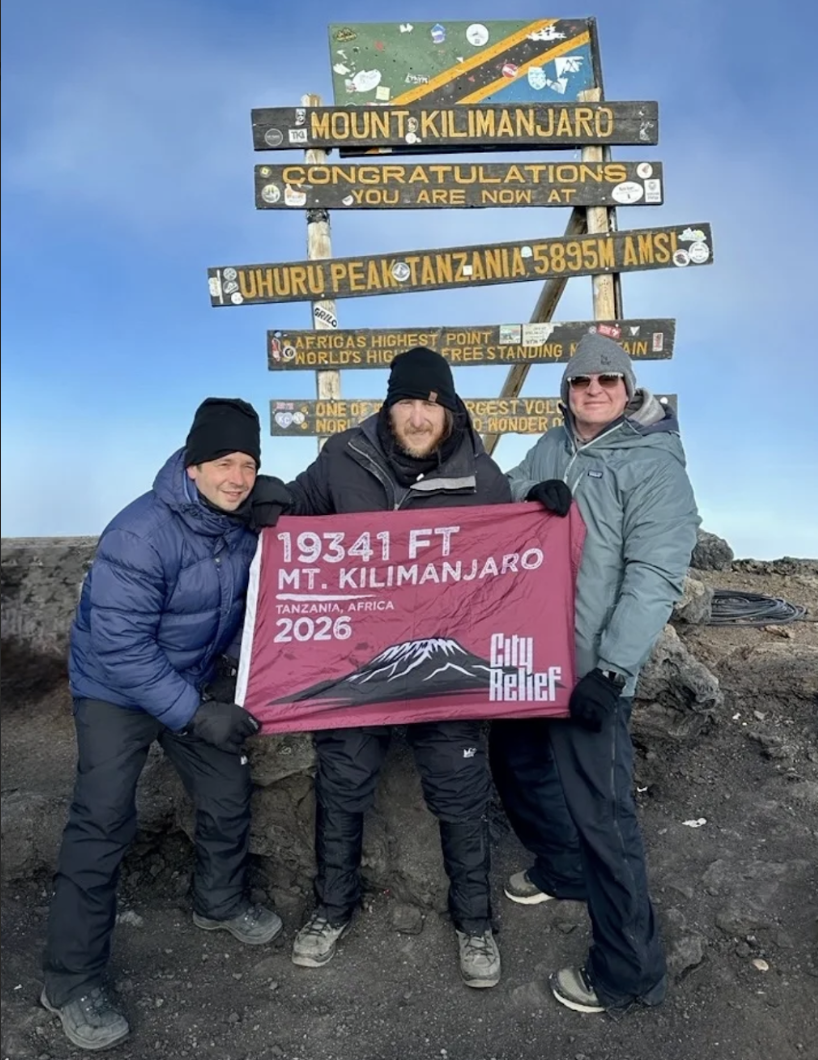
Hours later, as the sun rose, we reached Stella Point. But the true summit—Uhuru Peak—was still about another hour away. When we finally arrived at 19,341 feet, what I felt wasn’t pride, it was gratitude. Gratitude for the guides who steadied me, who prayed for me, for those who carried what I couldn’t, for my wife, who told me to try, and for the doctor who gave me antibiotics “just in case.”
Because the truth of my Kilimanjaro experience could be summed up by saying it like this: “nobody summits alone.”
And honestly, the same is true on the streets. Every week at City Relief, we meet men and women climbing their own mountains toward housing, recovery, employment, and stability. From the outside looking in, it can appear like an individual journey, but it’s not.
Progress doesn’t happen because someone suddenly finds strength they didn’t have before. It happens because someone walks beside them—steady, consistent, compassionate—saying:
“Step here.”
“Go there.”
“You can do it.”
That’s what our outreach teams do. That’s what our volunteers step into. That’s what your generosity makes possible. You may not be on the front lines of homelessness every single day, but by caring for our guests, financially supporting our work, and by volunteering your time, you are part of the climb for thousands of people who are hurting, hungry and homeless.
Your participation becomes the steady hand, the clear direction, and the light when someone else’s goes out. With your help, we raised over $130,000 through this climb because we represent hundreds of generous people who care enough to give, as we often say at City Relief, “… that others may live.”
Whether on a mountain in Tanzania or on the streets of our cities in the United States, the truth remains the same: nobody summits alone.
Thank you for being a part of my journey. Next week is Good Friday. I’ll be sharing about the power of self-sacrifice in a world that celebrates self-sufficiency.
With gratitude,
Josiah Haken
City Relief, CEO
