
What "Enforcement First" Actually Looks Like | Our Efforts Week 6
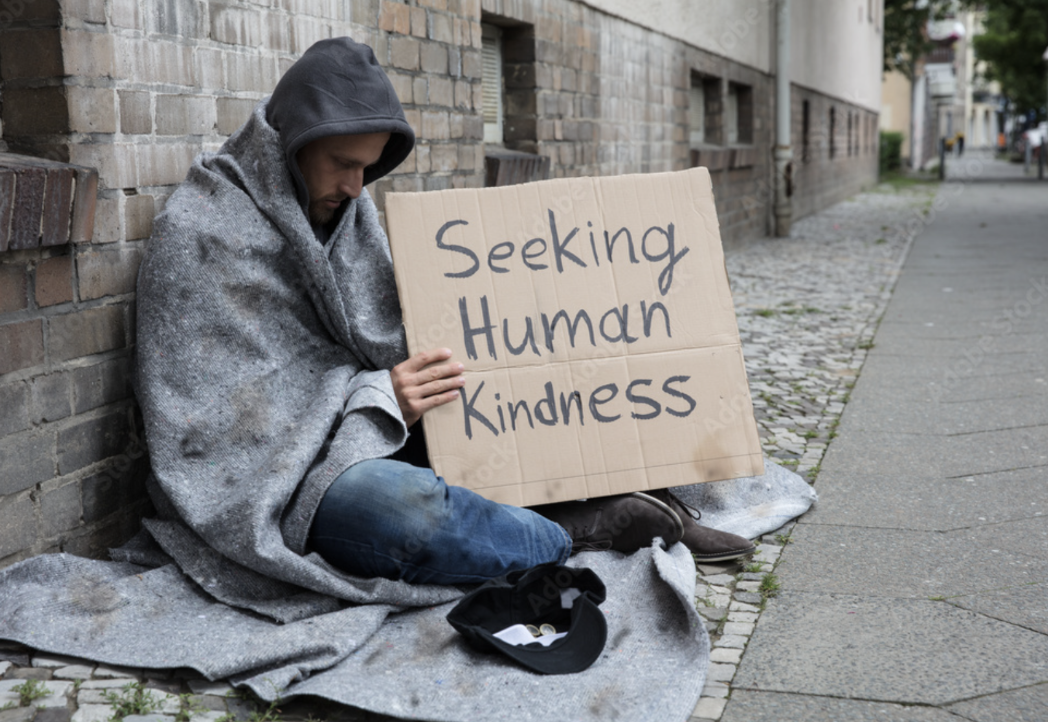
Over the last two weeks, I’ve introduced you to my friend James. A man who technically qualified for help, but couldn’t access it because every step forward required a level of stability he didn’t have. A man who needed housing not just because he lacked shelter, but because without a safe place to land, every part of rebuilding his life became exponentially harder.
And yet, in a growing number of cities across America, the response to people like James is moving in a new direction.
Not Housing First.
Not even Shelter First.
Let’s call it, “Enforcement First.”
Last summer, the Supreme Court ruled in City of Grants Pass v. Johnson that cities can enforce bans on sleeping or camping in public spaces, even when there are no adequate indoor alternatives available.
Then, in 2025, President Trump issued an executive order encouraging tougher enforcement approaches to homelessness and a move away from Housing First policies.
Since then, we’ve watched states like Indiana, Louisiana, and Utah advance camping bans, expanded enforcement powers, institutional-style treatment campuses, and more punitive responses to visible homelessness. Supporters argue these policies are necessary to restore public order and address growing frustration around public safety, encampments, addiction, and untreated mental illness.
And to be fair, those frustrations are real. No one wants neighborhoods to feel unsafe. No one wants people living in crisis on sidewalks or public transit systems. Communities deserve solutions too.
But here’s the question we have to wrestle with honestly: What happens when enforcement becomes the primary strategy before viable alternatives actually exist? Because for someone like James, enforcement doesn’t resolve homelessness. It simply makes homelessness harder to survive.
Imagine James finally falling asleep at 2:30 in the morning after hours of trying to stay alert enough to protect himself and his belongings. Then, at 5:00 AM, police officers wake him up and tell him he has to move. A week later, he gets a citation for camping. He misses the court date because he has no phone, no calendar, no mailing address, and no safe place to store paperwork. That missed appearance becomes a warrant. Then sanitation crews clear the area where he had been staying. His blankets are gone. His documents are gone. The few medications he had are gone too. And just like that, whatever fragile progress he was making disappears.
This is the part of the conversation we often skip over. Before James is homeless, he is a human being. A citizen. Possibly a veteran. And if you are a follower of Jesus like I am, we understand James to be “fearfully and wonderfully made” in the image of God. Or as it says in Matthew 25:34-40, James represents a physical manifestation of Jesus himself!
So regardless of how he ended up here, he is still deserving of dignity, safety, and the same basic protections we would want for ourselves.
Now, please don’t misunderstand me, that doesn’t mean communities should just accept chaos. It doesn’t mean harmful behavior should be ignored. But two things can be true at the same time, and homelessness will never be solved by criminalizing human survival when no realistic alternatives exist.
Because citations don’t create housing. Displacement doesn’t create stability. And enforcement without support often just pushes people further from the help they need.
The truth is, we need both compassion and accountability. We need safer public spaces, better shelter systems, more treatment options, more outreach teams, and far more affordable housing.
Because if we continue treating homelessness primarily as a law enforcement problem, people like James will continue moving from block to block, system to system, without ever actually getting home.
And that’s the deeper question underneath all of this. Not whether people should move off the sidewalk. Of course they should. The real question is: Move to where?
Next week, I’ll wrap up this series by making the case for a more holistic, “all of the above” approach to homelessness—one that prioritizes housing, invests in shelters and treatment, expands outreach for people already living outside, and reserves enforcement for situations where it is truly necessary. Because the reality is, no single strategy can carry the full weight of a crisis this complex.
Grateful you’re in this conversation with me,
Josiah Haken
City Relief, CEO
