
Why Our Efforts to Solve Homelessness Are Falling Short (Week 1)
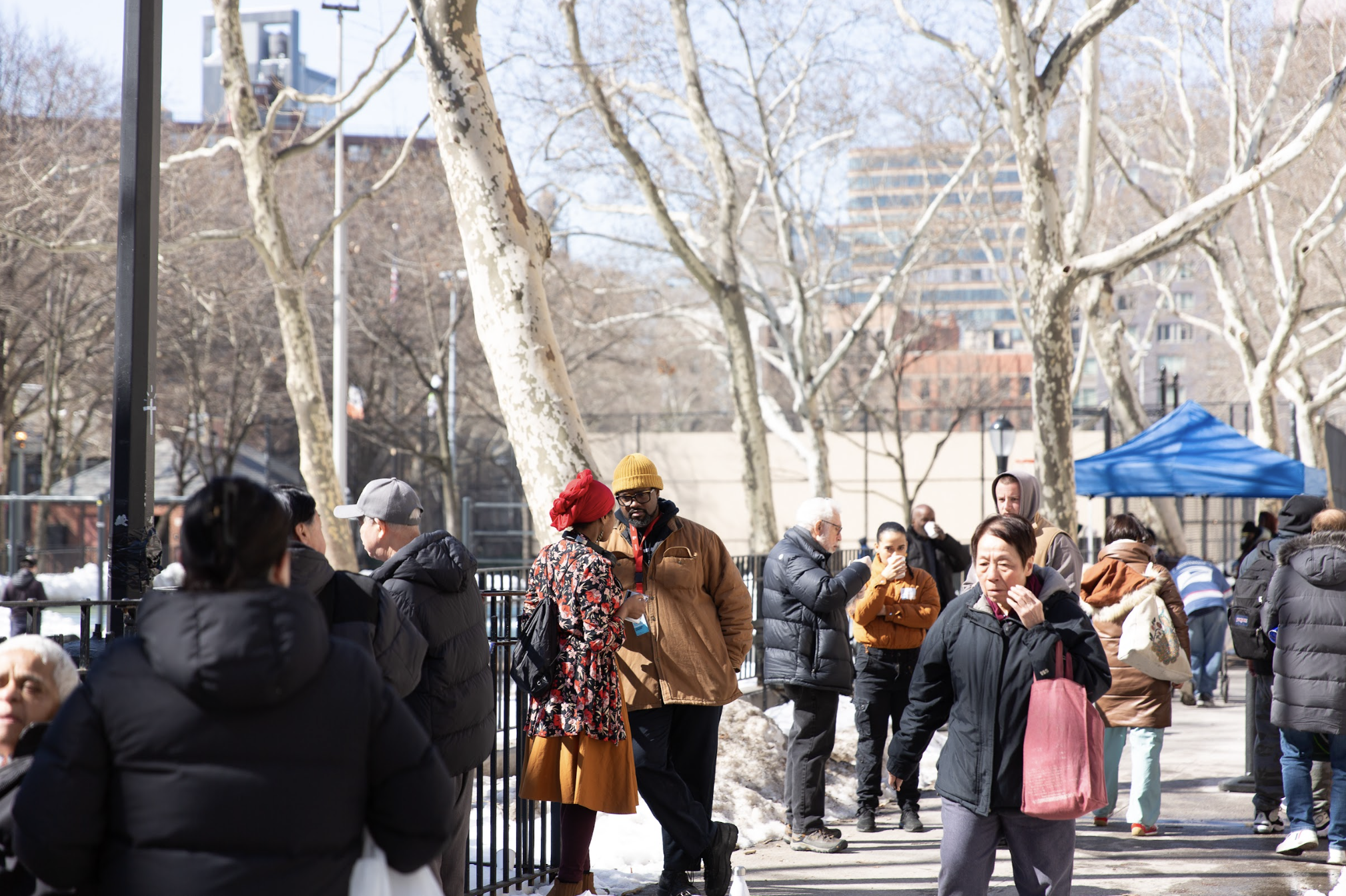
I met a woman last week at our Chelsea Park outreach. I’ll call her “K.”
K is articulate, soft-spoken, and in her forties. She’s the kind of person you could stand next to in church, sit beside on the subway, or pass in line at Starbucks and you wouldn’t think twice. She doesn’t panhandle, use drugs, or experience mental illness (at least not from what I could tell).
She graduated high school and took some college classes. She’s thoughtful, aware, and doing her best to navigate a system that often feels impossible to understand. And yet, K is experiencing homelessness. She’s currently living in a shelter, trying to survive on about $200 a month in SNAP benefits and $22 a month in cash assistance.
That’s it.
Her health challenges make it nearly impossible to work consistently. And like so many others in her situation, she’s caught in the long, uncertain process of applying for SSI—something that can take months or even years, and often requires legal help just to have a real chance. Most applicants are denied the first time.
As I stood there talking with her, it hit me that if you passed her on the street, you wouldn’t see homelessness, you would just see a neighbor.
And yet, homelessness in America is becoming harder to ignore. You see it at highway exits, outside grocery stores, in subway stations, and increasingly, in neighborhoods that once assumed the problem belonged somewhere else. And let’s be honest, for every new tent you see on the sidewalk and for every panhandler, there are ten more people like K who you don’t see.
The pressure is building from rising housing costs and inflation to evictions, gaps in healthcare, domestic violence, foster care breakdowns, addiction, mental health challenges, and a safety net that too often has holes where people need it most.
And yet, when you combine federal, state, local, and private spending, we are investing billions of dollars every year trying to address homelessness. And still, here we are. Our system is perfectly designed to produce the results we’re getting.
Which raises an honest question…Why is that?
Why does it feel like we’re spending so much and falling further behind? Why do so many solutions feel like they’re not actually solving anything? Why does it feel, at times, like we’re just rearranging deck chairs on the Titanic?
I don’t think the answer is simple, but I do think it’s worth exploring. Over the next few weeks, I’m going to take a deeper look at what we are currently doing to address this problem and why what we are doing doesn’t appear to be working at scale. I will then try to make a case for a more nuanced and holistic approach that I believe would make a significant impact on the “problem” of homelessness.
Because if we’re honest, most communities aren’t dealing with a lack of effort, they’re dealing with a lack of alignment. And until we start seeing the whole picture, we’ll keep responding to symptoms instead of investing in solutions while more and more people like K fall through the cracks.
Thanks for following along,
Josiah Haken
City Relief, CEO
