
Lessons From Kilimanjaro: When the Only Way Down Is Up (Week 3)
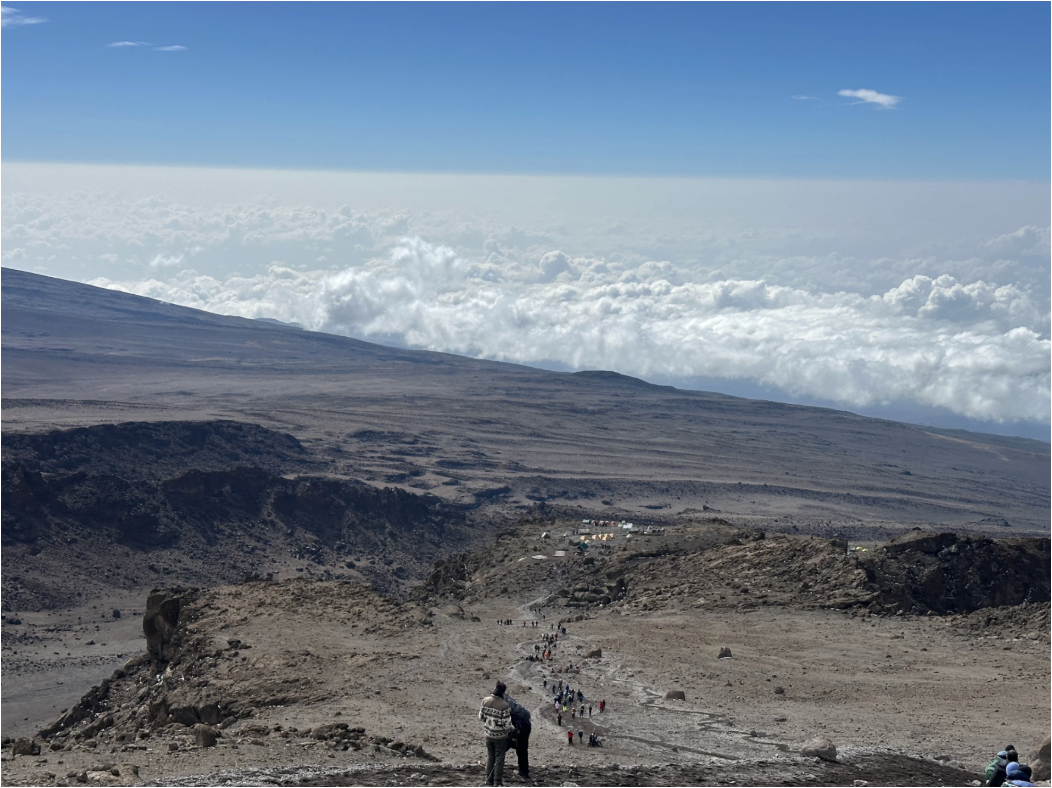
The storm had passed by morning, but the mountain hadn't made any promises.
The sky above camp was wide and blue, almost offensively calm. If you hadn't been there the night before, you would assume everything was fine, but my body knew better.
The violent shaking was gone, but I wasn't restored. My appetite had disappeared, my head felt heavy, and my legs felt hollow — not weak exactly, just empty.
The plan for the day was simple in theory. Climb to Lava Tower at over 15,000 feet, then descend several thousand feet to a lower camp.
Climb high and sleep low. It's the way to help your body get acclimated to altitude.
Ever since the storm the night before, Lupa, our guide, stayed close as we climbed. He wasn't hovering; just near enough to read my pace. If I slowed, he slowed.
Within the first hour, I knew I wasn't fully recovered. Another climber on our team named Richard noticed me struggling before I said anything.
"Let me take your pack."
I gave it to him willingly. Fortunately, for both of us, Lupa noticed Richard carrying two bags and quickly stepped forward and, decisively, took it himself. From that moment on, I wasn't carrying my own weight.
When we reached Lava Tower for lunch, the sun briefly broke through the clouds. Everyone else reacted immediately.
"Wow, it's hot."
Layers came off with faces turned toward the sun, but I sat there shivering. The sun was out, and I was cold. That's when I knew something wasn't right. The mountain shifted again. Clouds rolled in, sleet began to fall.
We packed up and began descending toward the next camp.
By the time we arrived, the rain had intensified. I went straight to my tent and crawled into my sleeping bag. A few minutes later Derrick, our guide, stepped inside the tent.
"How are you feeling?"
"I'm alive," I said.
But when he checked my temperature, he told me I had a fever.
After Derrick left, a few of us talked through the possibilities. If I felt worse in the morning, I might need to leave the mountain, but there was a complication.
The camp we were in sat below a massive rock wall — the Barranco Wall — that every climber has to ascend the next morning. Vehicles couldn't reach us there and helicopters weren't guaranteed.
If I needed to descend, I couldn't simply walk downhill. To get off the mountain, I would have to climb first. Only from there would descent be realistic. Turning back wasn't easier. It was just another climb.
Lying there in my tent, I realized how often life works that way for our neighbors navigating homelessness. People often imagine that leaving homelessness is simply a matter of "getting back down the mountain" — finding a job, securing housing, getting stable.
But the reality is rarely that simple. Sometimes the path out requires climbing first. Replacing lost documents, navigating systems that weren't built for you, rebuilding trust after years of survival, and taking steps that feel harder before life gets easier.
From the outside it can look confusing. Why is this taking so long? But anyone who has walked those paths knows the truth. Sometimes the only way down is up.
That night I took the antibiotics my doctor had packed "just in case." We prayed quietly for wisdom about the morning for clarity about the next step. More often than we'd like, faith isn't about seeing the whole route, it's sometimes simply having the courage to take the next step, even when the mountain insists that up is the only way forward.
Pole, pole. Slowly, slowly.
Thanks for reading,
Josiah Haken
City Relief, CEO
